Building the operating system for primary health care
A computational platform that encodes what medical science and delivery experience show should be done for each health condition into computable care pathways, integrates the digital tools that support each step, and orchestrates delivery through local teams — closing the gap between what we know and what we do, at scale
Four billion people lack quality primary health care. The problem is not what we know — it is what we do.
About four billion people in low- and middle-income countries lack quality health care. Not because medicine does not have answers, but because health systems cannot reliably execute what is known. The barriers are quality (are the right things done well?), scope (can a local system manage a comprehensive range of conditions?), and fidelity (do the steps that need to happen actually happen, on time?).
Today, what should be done is encoded in guidelines and expert knowledge far from the point of delivery. Whether it actually happens depends on local capacity and supervision that is uneven and often cannot ensure reliable execution. For a population of 5,000, even five steps per person per year means 25,000 asynchronous actions across homes, clinics, and referral facilities. No manual system can coordinate this combinatorial complexity.
A new category of health infrastructure
A primary health care operating system (PHC-OS) is a computational platform that encodes what medical science and delivery experience show should optimally be done for each health condition into computable care pathways — not guidelines on paper, but executable logic that ensures each clinical decision is made, tracked, and refined. It integrates the digital tools that support each step, and orchestrates delivery through local teams of community health workers, nurses, and physicians — ensuring that what each patient needs across multiple providers and time horizons is computationally coordinated.
It merges the encoding of best practice with the orchestration of its execution through a single computational layer. As AI matures, the same architecture could progressively absorb diagnostic reasoning, predictive analytics, and autonomous clinical agents — making the system not just operational but intelligent.
Not another app. An operating system.
Excellent digital tools exist at every level. System-level platforms — CommCare, DHIS2, OpenMRS — digitize encounters, store records, and generate reports. A growing ecosystem of point-of-care tools — AI-powered diagnostics, portable imaging, automated screening — can enhance individual clinical tasks. What neither category does, alone or together, is coordinate a single patient's care across conditions, providers, and time; manage concurrent pathways so that a hypertensive diabetic pregnant woman receives integrated rather than siloed care; or feed every action back into system-level learning. These tools improve steps. A PHC-OS steers primary health care delivery for a population.
What it looks like
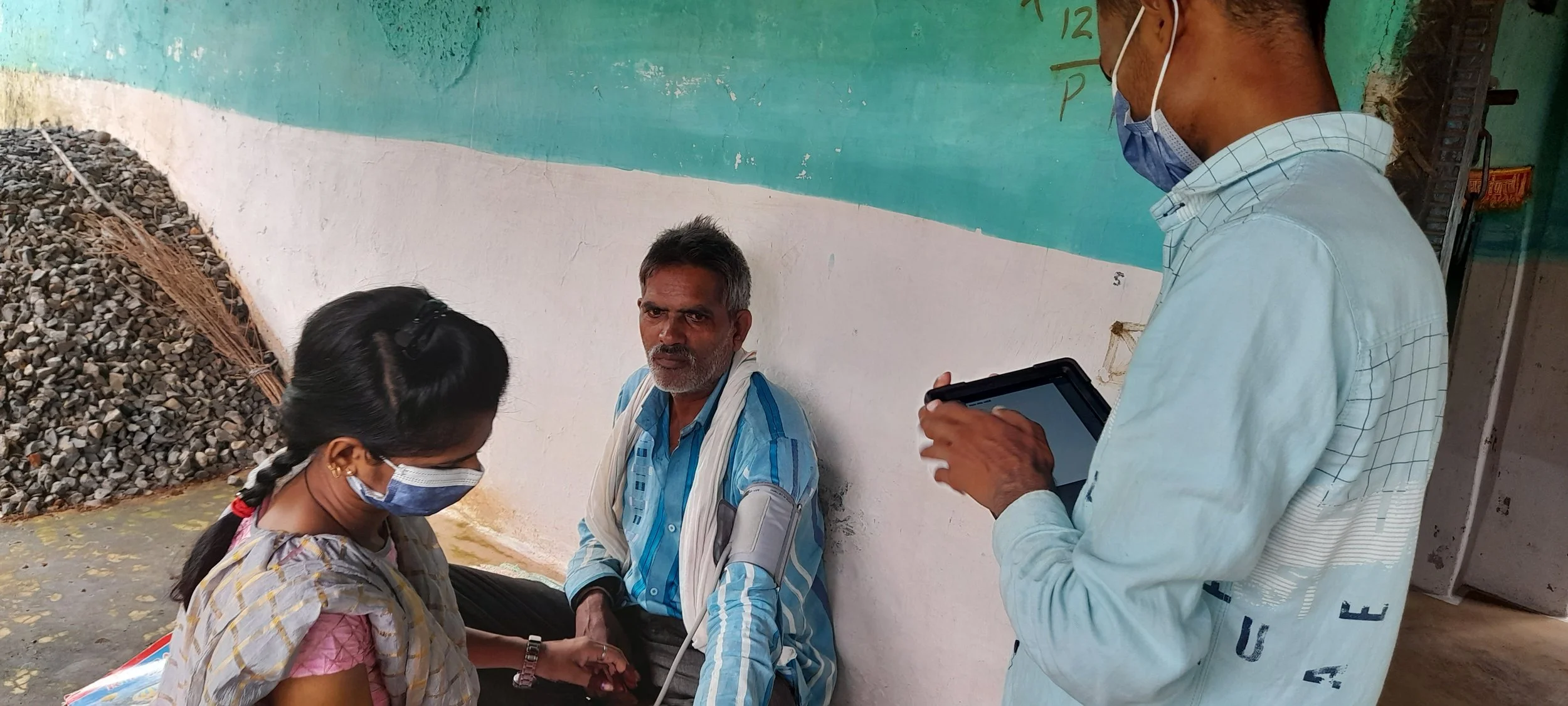
A 52-year-old man is found to have elevated blood pressure during a routine CHW home visit. The system triggers a hypertension pathway: confirmatory readings are scheduled, medication is initiated, monitoring visits are queued. Because the system encodes comorbidity logic, it simultaneously flags him for diabetes screening. When fasting glucose returns elevated, a second pathway activates alongside the first. The system coordinates both: consolidating clinic visits, checking medication conflicts, adjusting monitoring frequency, and routing the patient to a physician via telemedicine when titration exceeds nurse-level protocols. If a refill is missed, it alerts a CHW. If a blood pressure reading is overdue, it escalates. If renal function declines, it flags a referral with the full longitudinal record.
No single tool does this. Each step is currently amenable to rule-based coordination. What has not existed is the architecture connecting them across conditions, providers, and time.
From vertical pathways to integrated delivery
Each health condition's care pathway is designed as if the entire system existed for that one condition — spanning public health through screening, treatment, follow-up, and referral. All vertical pathways are then harmonized into a single horizontal delivery system, prioritized by policy and local epidemiology, delivering coordinated care through the same local teams.
The evolving locus of care
As AI matures, care progressively shifts from facility-based physician encounters through telemedicine, AI-augmented clinicians, CHW-mediated AI, patient-facing AI companions, and ultimately personal agentic health operating systems — with the PHC-OS as the governing architecture at every stage.
The endpoint: personal health agents within a population architecture
The logical endpoint of this progression is a fundamental architectural evolution. As agentic AI matures, a PHC-OS could progressively delegate to personal agentic health operating systems — one per individual — that manage each person's care pathways continuously: tracking health status, coordinating with providers, prompting preventive actions, integrating wearable monitoring, and managing logistics like medication refills and appointment scheduling. The population-level PHC-OS would then function as the governing layer — aggregating data for population-level intelligence, ensuring equity and quality standards, and maintaining the clinical governance within which personal agents operate.
Buildable today. Progressively more powerful.
Phase 1 requires no artificial intelligence — only the digitization of what we already know should happen. Most of what falls through the cracks in primary health care is not a failure of clinical judgment but of operational coordination — and that is automatable now. As AI matures, the same architecture absorbs progressively more capable tools. The architecture stays constant. The capabilities at each node advance.
Proving the concept in practice
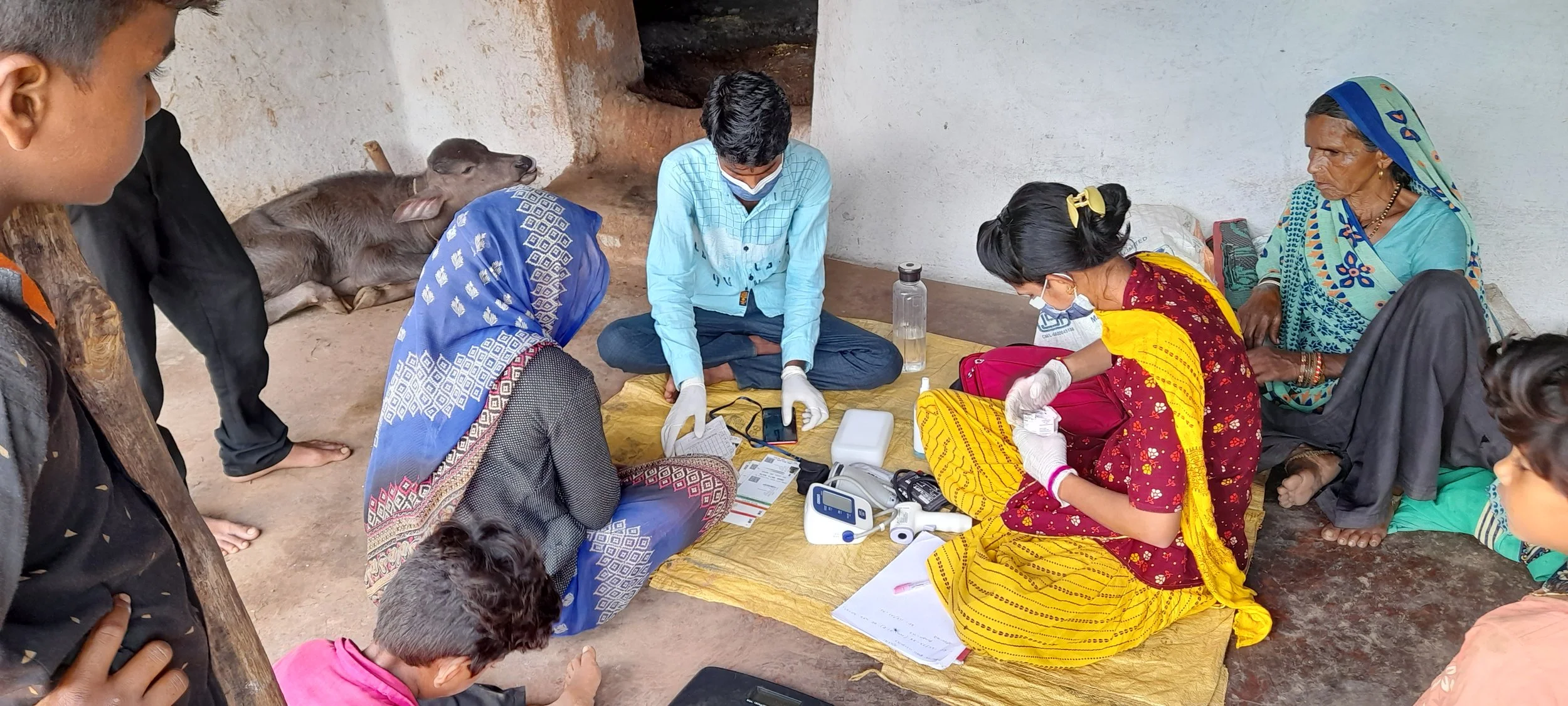
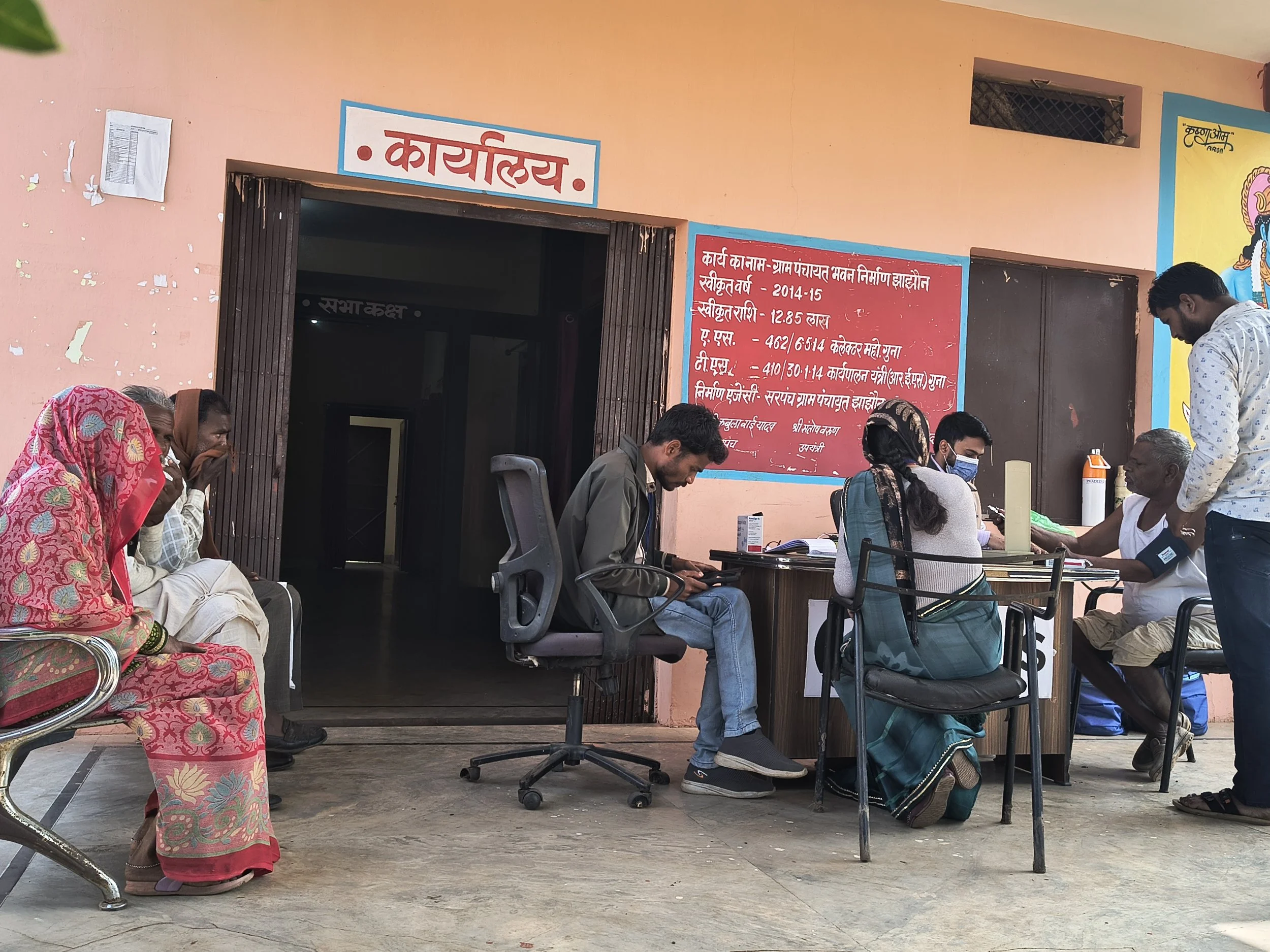
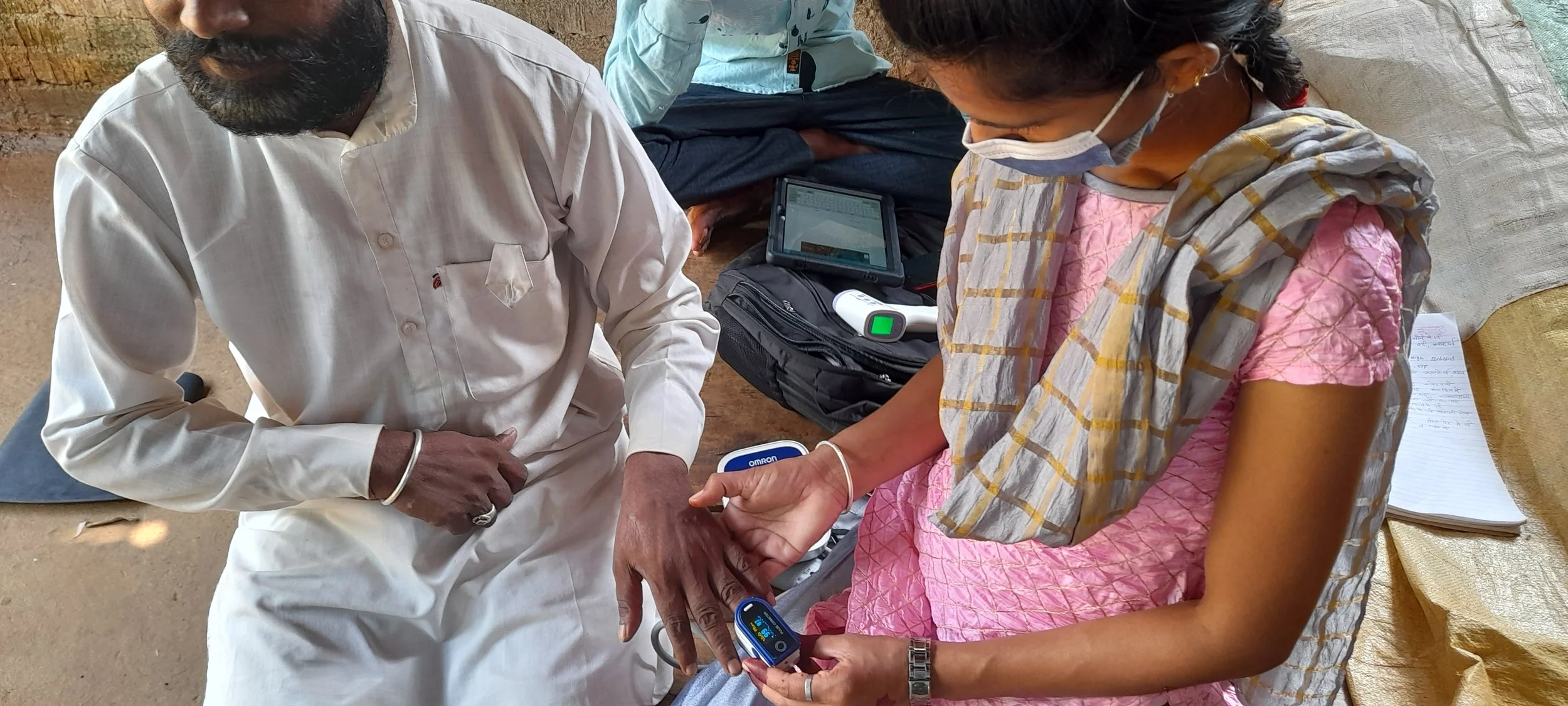
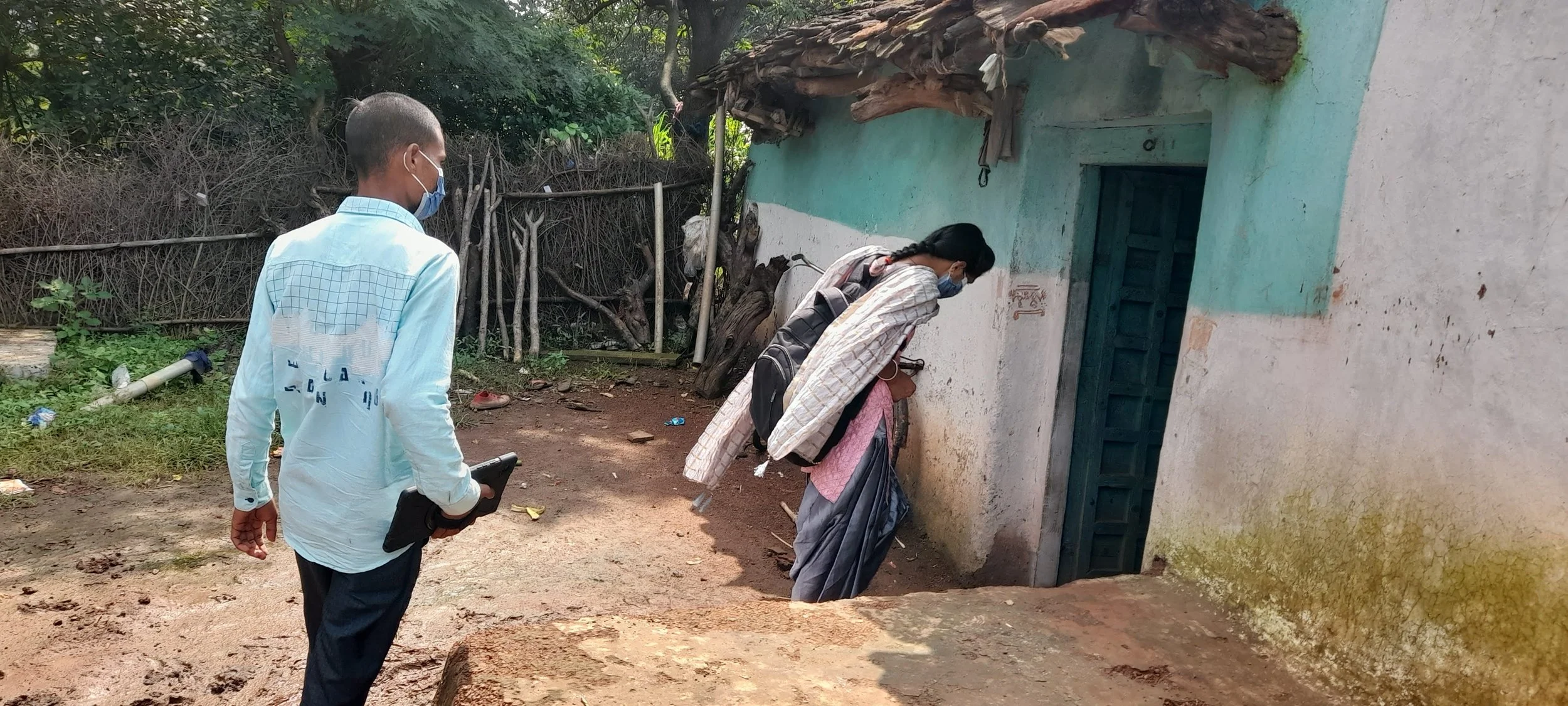
Optimize Health is a nonprofit organization founded to develop the PHC-OS concept and prove it in practice. Our work in rural Madhya Pradesh, India involves building the hardware — organizing community health workers and clinicians into teams serving defined populations — and progressively layering in the computational infrastructure. Our goal is not to be the only organization building a PHC-OS. It is to establish the concept, demonstrate it, and catalyze a field in which primary health care operating systems become standard infrastructure for health delivery worldwide. The concept emerged from decades of building PHC systems across Rwanda, Liberia, Nigeria, and India: local execution works but cannot scale; higher-level policy aligns resources but cannot assure delivery. The PHC-OS is the missing computational layer connecting the two.
Explore the framework
The four billion people who lack adequate primary health care do not lack it because medicine has failed. They lack it because delivery systems have not kept pace with what medicine knows. A PHC-OS is how we close that gap — a new class of systems infrastructure that makes comprehensive, continuously improving primary health care a deployable reality.
The full PHC-OS concept is detailed in our preprint: "The Primary Health Care Operating System: A Framework for Encoding and Orchestrating Comprehensive Care Delivery." Contact: ranu.dhillon@optimize.org