Our work in Guna
Optimize Health delivers comprehensive primary health care for a defined rural population while building an operational architecture designed to scale. We operate this model today in Guna district, Madhya Pradesh, where we have been working since 2021.
Foundation
Population-based comprehensive primary health care means caring for everyone in a defined population continuously — across promotion, prevention, diagnosis, treatment, longitudinal management, and coordinated referral, for all conditions, ages, and life stages — alongside essential public health functions and community engagement that operate at the population level. Articulated at Alma-Ata in 1978 and reaffirmed at Astana forty years later, this conception of primary health care is the foundation for equitable health systems and better population health. It remains, in most of the world, an aspiration rather than a reality.
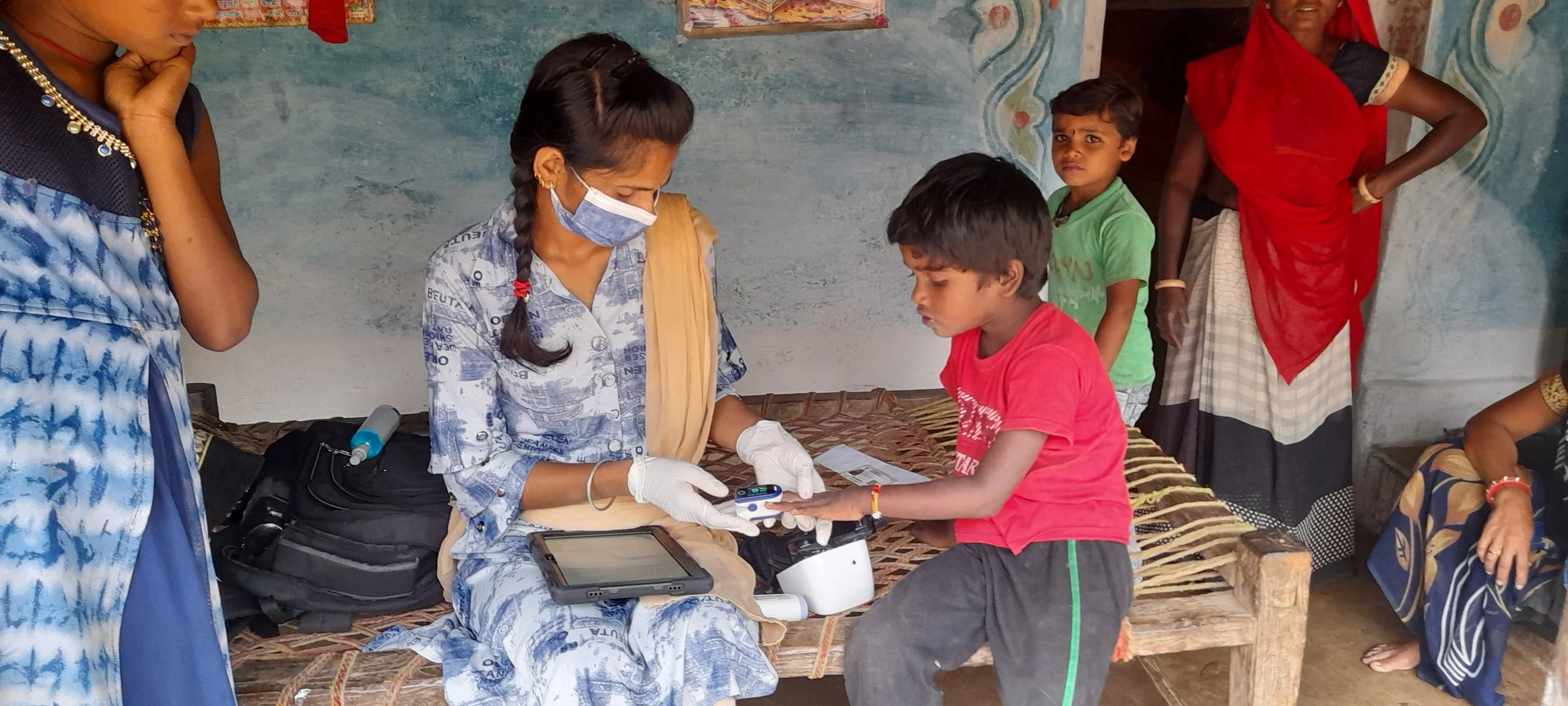
We serve an empaneled catchment of roughly 5,000 people across nine villages. Every individual in the catchment is registered, known to the team, and followed longitudinally. Care is continuous rather than episodic — the same teams attend to the same families over time, integrating prevention, screening, treatment, and chronic disease management within a single relationship.
The team manages the full scope of primary health care:
Acute illness — common infections including respiratory illness and diarrheal disease, with timely diagnosis and treatment.
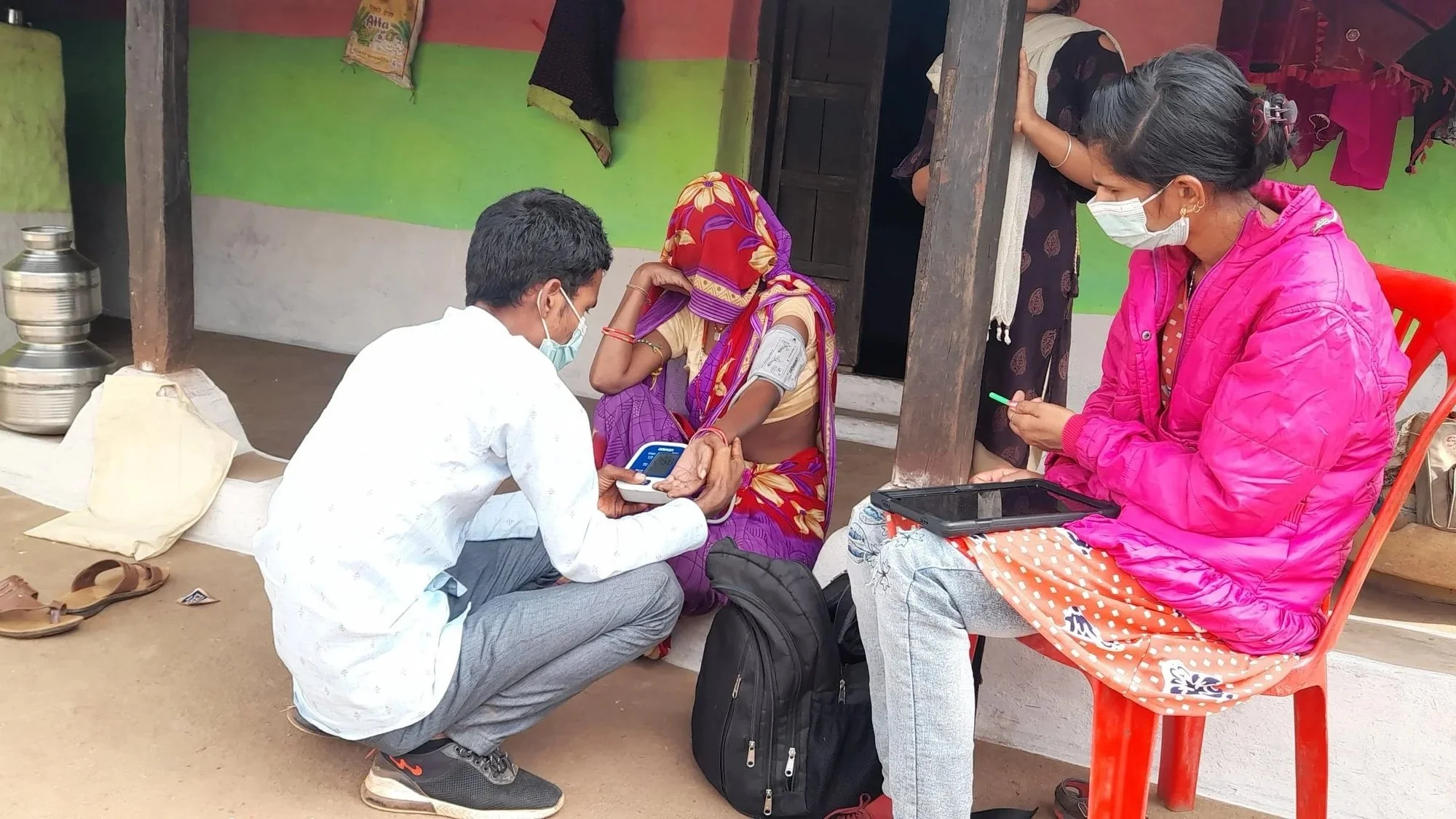
Chronic disease — hypertension, diabetes, and other conditions, managed through proactive screening and ongoing follow-up.
Maternal and child health — antenatal and postnatal care, child development monitoring, immunizations.
Promotion, prevention, and screening — at the level of both individual and community.
Linkages to higher levels of care — when a patient requires services beyond primary care, the team coordinates the referral and follows up afterward.
Team-Based Care
Care is delivered by a small team designed for comprehensive primary care:
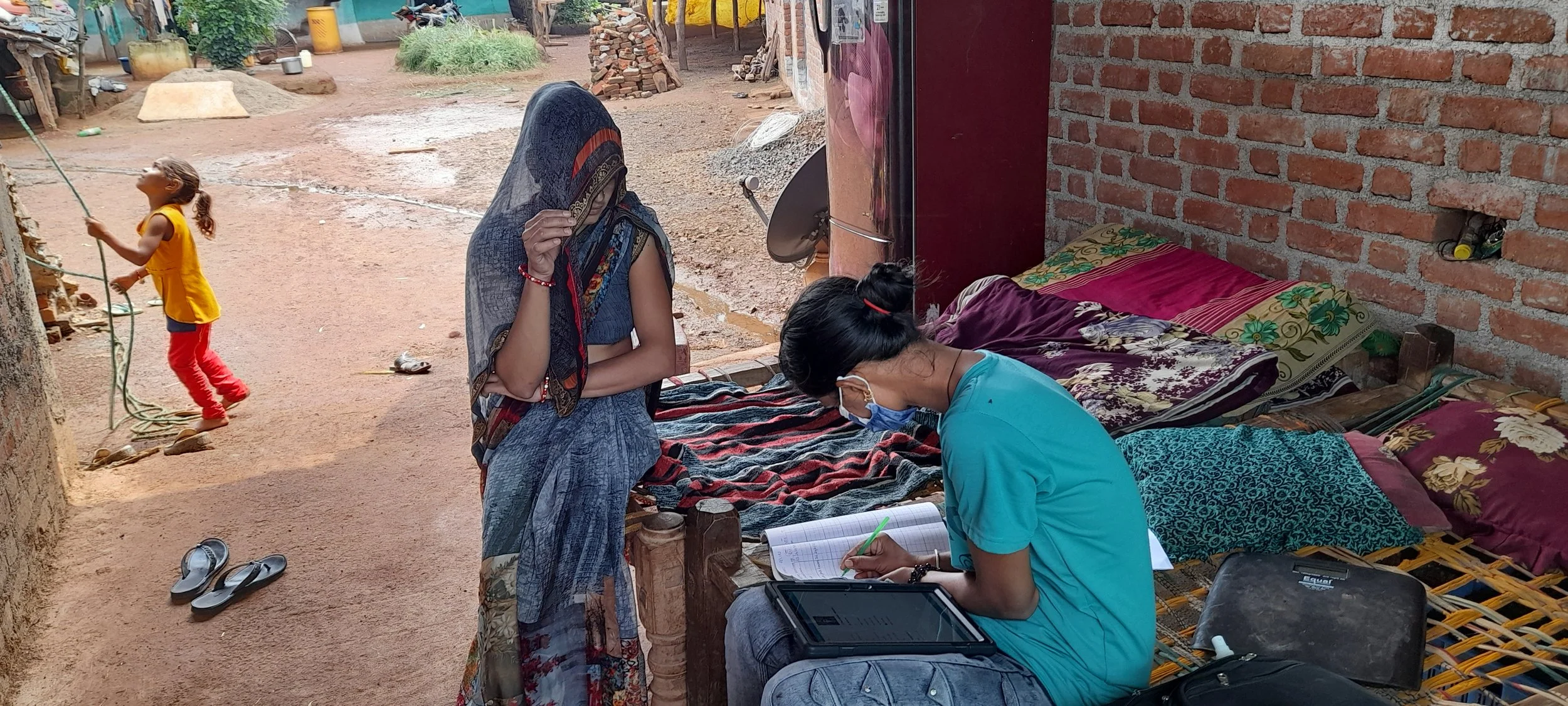
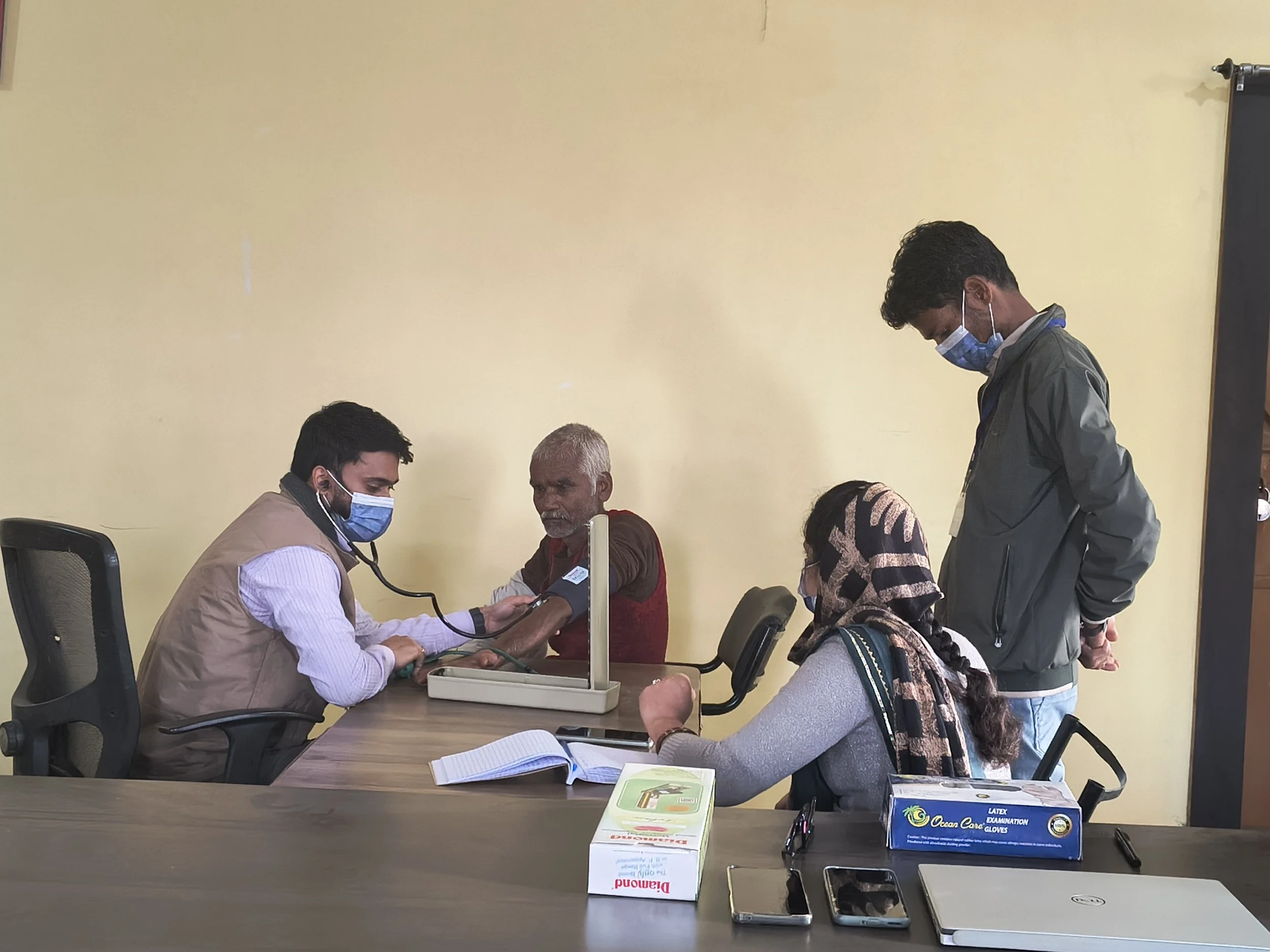
Community health workers attend to families in their homes — conducting screenings, providing health education, monitoring chronic conditions, and coordinating follow-up.
A physician is integrated into the team through scheduled and on-demand telemedicine consultations to address acute illnesses and to steer preventive and long-term management.
A pharmacist ensures the safe dispensing of medications and educates patients on their treatments.
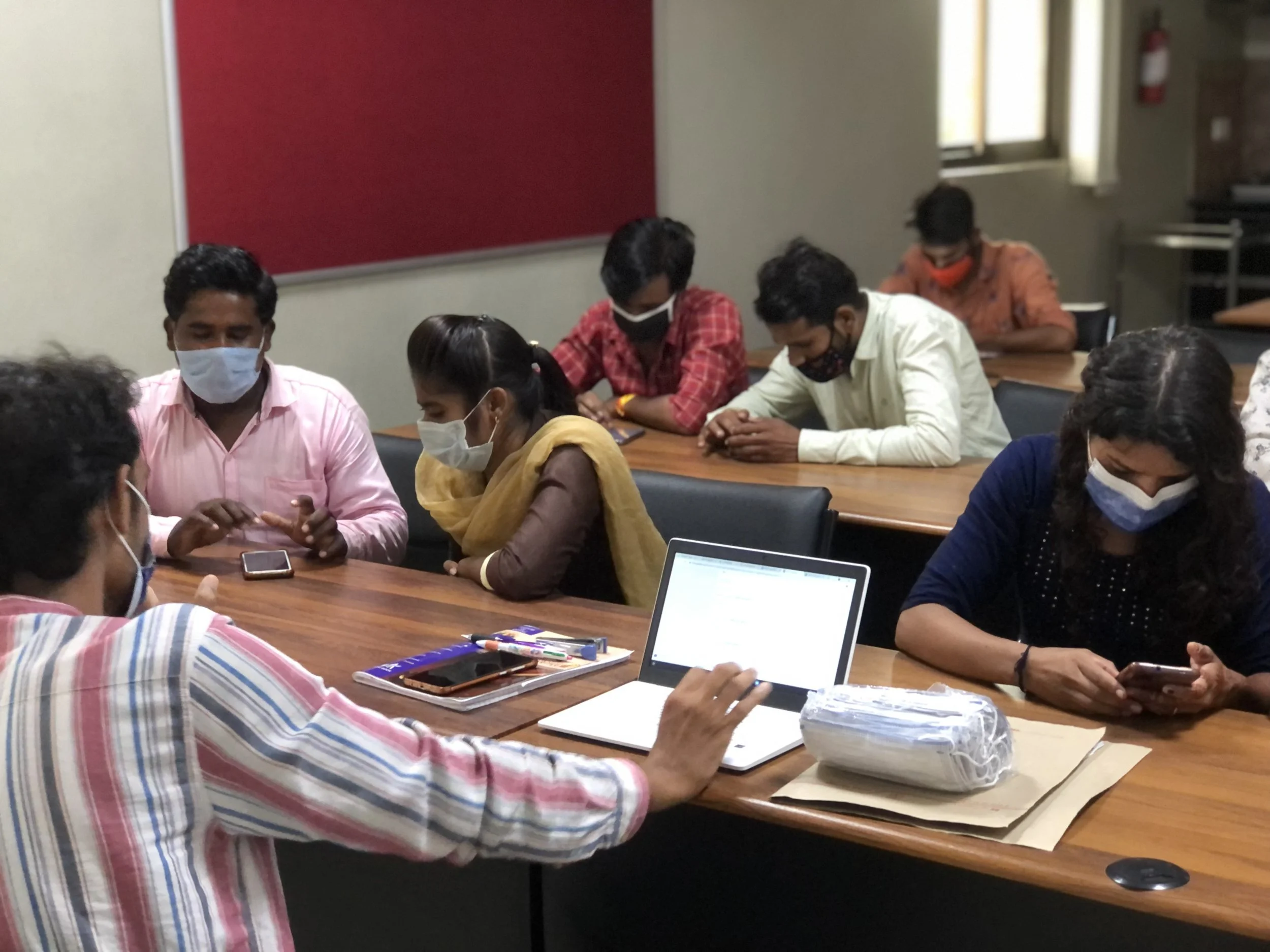
An operations team manages day-to-day logistics, helps coordinate referrals, and ensures that no patient or condition falls through the cracks.
Integration and Partners
At the local level, where rural sub-centres are often nominally present but functionally limited for comprehensive primary care, Optimize Health operates as the source of primary health care for the population we serve. Above the sub-centre — at the district health system level — we integrate with public infrastructure: coordinating referrals and aligning with the broader health system in Guna district and, when needed, tertiary facilities in Bhopal. Our model is designed to be the comprehensive primary care that is otherwise missing at the village level, while remaining connected to the larger health system around it.
We work in close partnership with Pragati Manav Seva Sansthan, a local NGO whose programs in education, nutrition, and skill development address the broader social and economic determinants of health that clinical care alone cannot reach.
Our work is also shaped by a posture of learning rather than competition. Across India and globally, many like-minded organizations are working on different elements of primary health care — community health worker programs, chronic disease management, maternal and child health innovations, digital health and telemedicine, diagnostic and screening approaches. We aim to understand what works in those efforts and integrate those lessons into our own delivery model. Comprehensive primary health care at scale is too large a problem for any single organization to solve; the path forward depends on shared learning across the field.
Scale
The PHC delivery unit — roughly 5,000 people — is the unit of scale at which comprehensive integrated primary health care can be made to function. The work in this current catchment is developing the operating architecture for that unit: the integration logic, the orchestration of care across conditions and providers, the coordination that makes comprehensive primary care operationally tractable. That is the foundational work we are doing now.
This choice is informed by direct experience operating at much larger scale — including national programs in Nigeria, Guinea, and elsewhere — where the limits of broad deployment without unit-level integration become visible. Scaling a thin or fragmented layer of services across many villages is a different problem from making comprehensive integrated care actually function for a defined population.
Scaling from this unit is a different kind of work, and the team has been built for it. Our same team can support implementation for up to 25,000 people. Scaling within this range requires only additional community health workers — who must remain close to the families they serve — together with the medications and diagnostics that expanded coverage demands. The next phase will scale the model across several similarly sized catchments, and then to the district level, with the operating architecture supporting replicability at each step.